DE
EN

Essay
»Phantasmagorien des Interieurs«
Robin Rehm
From the Journal: architectura
Published online:
16. July 2026
Abstract
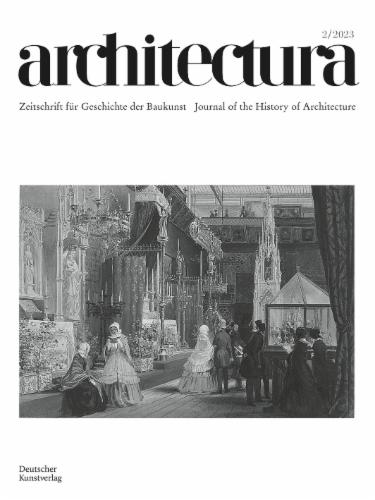
The interiors at the 1851 Great Exhibition in London mark a specific stage in furniture development: the transition from handcrafted pieces to mass-produced goods. Since the July Revolution of 1830, the bourgeoisie had prospered under Louis-Philippe and the Liberal Party. Subsequently, innovative interiors emerged, employing industrial materials and historical stylistic forms. Prince Albert and the Royal Commission based their conception of the Great Exhibition on this development in France. This article understands the London Great Exhibition as a dispositive that responded to industrialization and fostered interior design geared towards the bourgeoisie, as well as its purely sensory reception.
The interiors at the 1851 Great Exhibition in London mark a specific stage in furniture development: the transition from handcrafted pieces to mass-produced goods. Since the July Revolution of 1830, the bourgeoisie had prospered under Louis-Philippe and the Liberal Party. Subsequently, innovative interiors emerged, employing industrial materials and historical stylistic forms. Prince Albert and the Royal Commission based their conception of the Great Exhibition on this development in France. This article understands the London Great Exhibition as a dispositive that responded to industrialization and fostered interior design geared towards the bourgeoisie, as well as its purely sensory reception.
Other articles in this issue:
architectura Issues
Volume 53 (2023)
Volume 52 (2022)
Volume 51 (2021)
Volume 50 (2020)
Volume 49 (2019)
Volume 48 (2018)
Volume 47 (2017)
Volume 46 (2016)
Volume 45 (2015)
Get instant, unlimited access to this journal
Related titles
Would you like to receive monthly information about new publications and events?

English